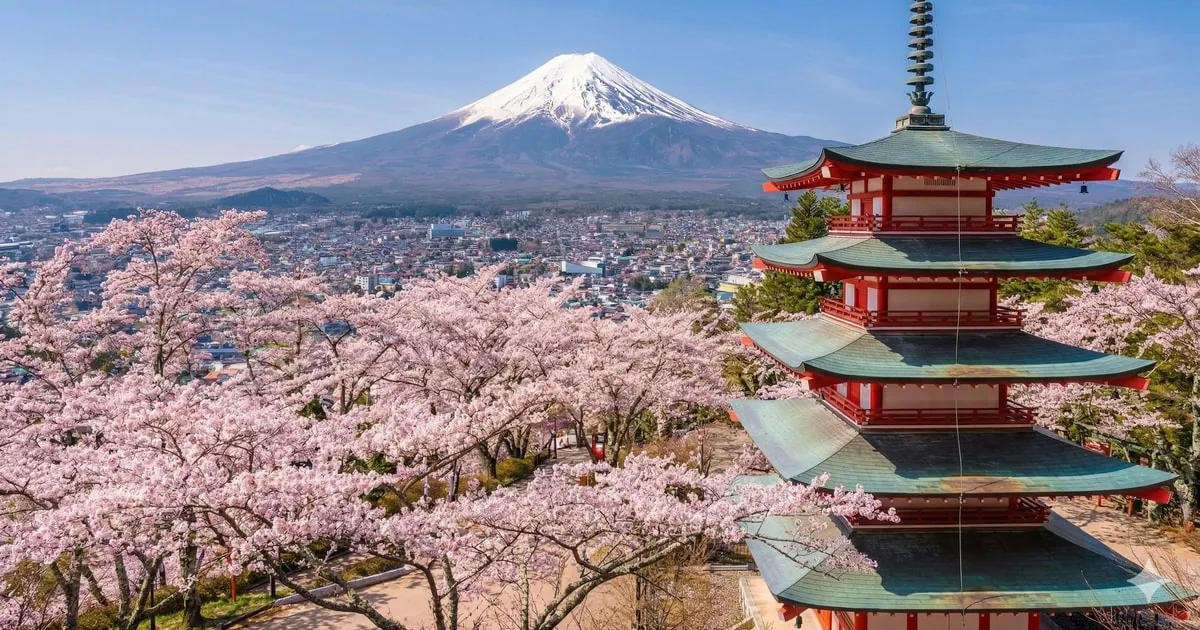
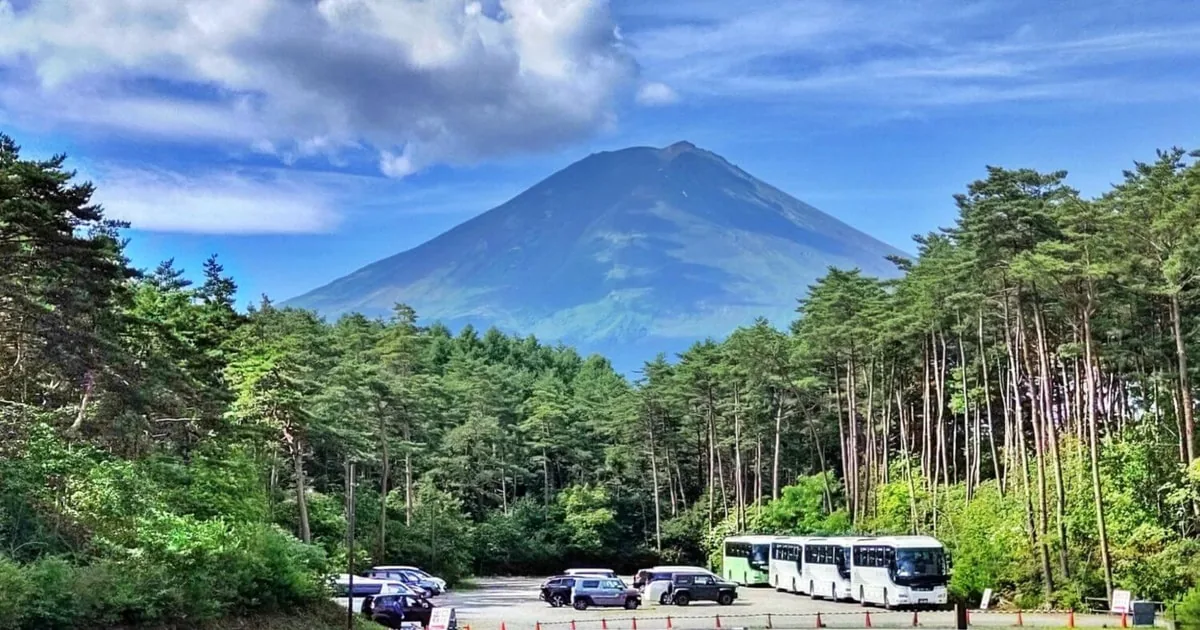
Booking choice: The guided 2-day summit climb, ★ 5.0 (2). Check dates Compare the options below
Four official trails lead to the summit of Mount Fuji, each starting from its own 5th station. The name is misleading: the 5th stations sit at very different heights, from 1,440 m on the Gotemba Trail to about 2,400 m on the Fujinomiya Trail, so the climb ahead of you varies from about 1,300 m to about 2,300 m of ascent. The trails also differ in how many huts they have, how crowded they get and how you come down.
This guide compares them with the official figures, then looks at each trail, the walk around the summit crater and how to reach each 5th station. How hard the climb is overall is in how hard Fuji is; the fee, gates and registration on each trail are in the rules for 2026.
The quick answer
The Yoshida Trail (5th station 2,305 m, about 6 hours 10 minutes up) is the best choice for first-timers thanks to its many huts and separate paths up and down, but it carries more than half of all climbers. The Fujinomiya Trail (about 2,400 m, about 5 hours 10 minutes up) is the shortest and steepest, with the same path up and down. The Subashiri Trail (2,000 m, about 6 hours 25 minutes up) begins in the forest and joins the Yoshida Trail at the 8th station; its descent is a fast sandy run. The Gotemba Trail (1,440 m, about 8 hours 40 minutes up) is the longest, with the fewest huts and a long sandy descent. All four reach the crater rim; the highest point, Kengamine (3,776 m), is on the west side of the crater. In 2026, Yoshida and Subashiri opened on 1 July, Fujinomiya and Gotemba on 10 July, and all four closed on 10 September.
Which trail on Mt. Fuji is considered the easiest?
No route is easy. The Yoshida Trail is the best choice for first-timers thanks to its many huts, although it is also the busiest. Fujinomiya is the shortest, but it is steep and shares one path for going up and down.
Easy on Fuji means three things: how much you have to climb, how often you can rest in a hut, and how pleasant the way down is. Yoshida scores well on huts and has a separate descent path, which is why officials call it the easier choice for beginners. Fujinomiya has the least climbing and the shortest distance, which appeals to people short on time, but the gradient is steady and steep, and in peak season the up and down traffic meet on the same path.
Subashiri is a good middle way if you want a quieter start, and Gotemba suits fit, experienced hikers who want space more than convenience. Whichever you choose, the altitude is the same at the top, so a hut night and a slow pace matter more than the trail.
How do the four Mount Fuji trails compare?
By the official figures, Fujinomiya is the shortest (4.3 km up, about 5 hours 10 minutes) and Gotemba the longest (10.5 km up, about 8 hours 40 minutes), with Yoshida and Subashiri in between at about 6 to 6.5 hours up.
The times are walking times without long breaks, taken from the official trail comparison. Real climbs take longer, especially for beginners and on crowded days. The elevation gain is the difference between the 5th station and the summit: about 1,320 m on Fujinomiya, 1,450 m on Yoshida, 1,700 m on Subashiri and 2,300 m on Gotemba.
| Trail | Starts at | Up | Down | Best for |
|---|---|---|---|---|
| Yoshida (Yamanashi) | 2,305 m | 6.8 km, about 6 h 10 min | 7.0 km, about 3 h 35 min | First-timers: the most huts, separate descent path |
| Subashiri (Shizuoka) | 2,000 m | 6.9 km, about 6 h 25 min | 6.2 km, about 3 h 20 min | A quieter forest start and a fast sandy descent |
| Gotemba (Shizuoka) | 1,440 m | 10.5 km, about 8 h 40 min | 8.4 km, about 3 h 30 min | Fit, experienced hikers who want space |
| Fujinomiya (Shizuoka) | About 2,400 m | 4.3 km, about 5 h 10 min | 4.3 km, about 2 h 40 min | The shortest route, if you can handle steep ground |
Is the Yoshida Trail the best choice for a first climb?
For most first-timers, yes. It has the most huts, first-aid stations in season, a separate path for the descent and good bus links from Tokyo. The price you pay is crowds: in 2024 about 55% of all Fuji climbers used it.
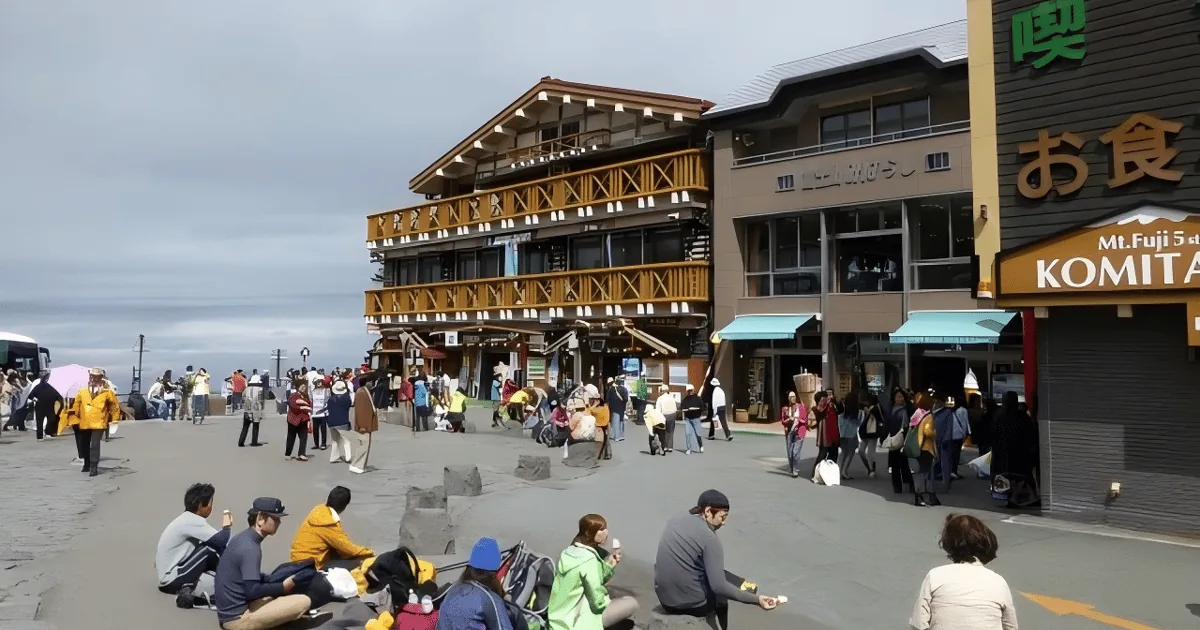
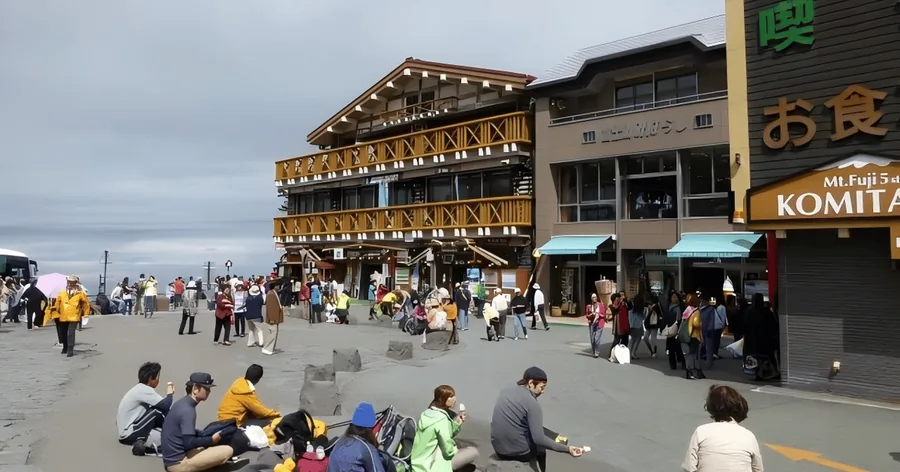
The Yoshida Trail starts from the Fuji Subaru Line 5th Station at 2,305 m on the Yamanashi side, the busiest of the four 5th stations, with shops, restaurants and a large plaza. The path climbs through huts clustered around the 7th and 8th stations, so you are rarely far from a rest stop, a drink or shelter. At the 8th station it merges with the Subashiri Trail, and the last stretch to the crater rim can queue before dawn in peak weeks.
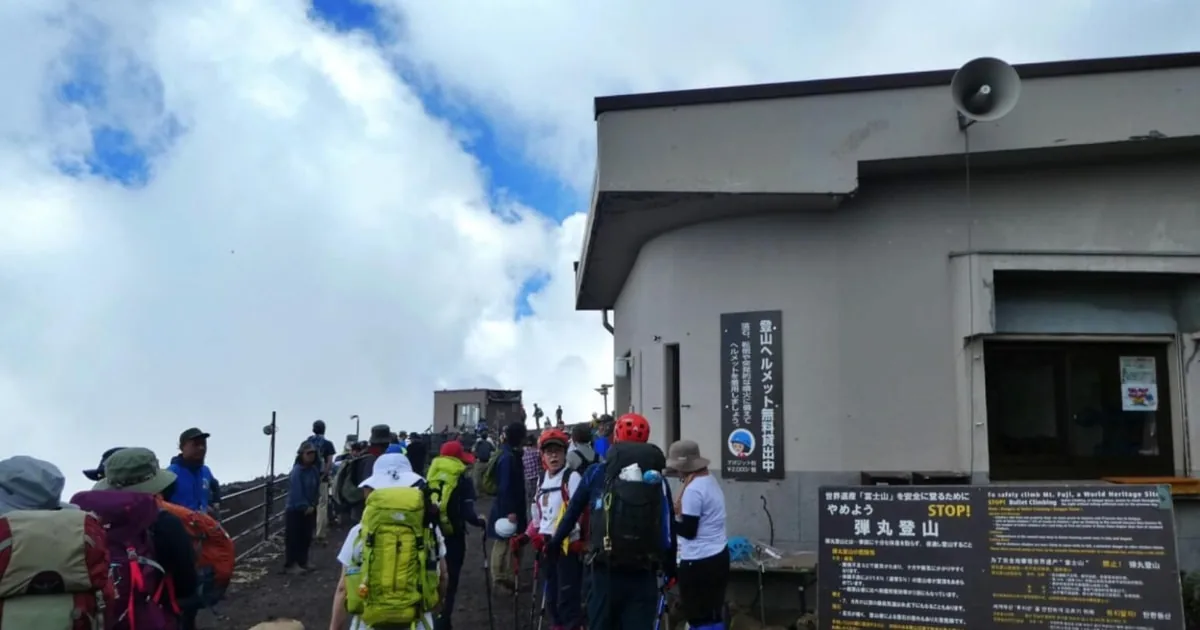
Yoshida is also the trail with the most rules: a gate at the 5th station, a daily limit of 4,000 climbers who are not staying in a hut, and gear checks. These are explained in the rules for 2026. On the way down, the descent path is a wide zigzag of loose gravel, separate from the way up; it splits from the Subashiri descent at the 8th station, so follow the signs for the Yoshida 5th station.
Choose your route with a private mountain guide: a 2-day summit climb on the trail that suits you, with route and schedule planned with you before the trip.
Check dates for the guided 2-day summit climbIs the Fujinomiya Trail the shortest way to the summit?
Yes. From a 5th station at about 2,400 m, the highest start of the four, it is 4.3 km and about 5 hours 10 minutes to the top. It is steep all the way, and you go up and down on the same path.
Fujinomiya is on the south side of the mountain, in Shizuoka, and it faces the Pacific: on a clear day you look down over Suruga Bay. The trail climbs fairly straight, with huts at most stations, and reaches the crater rim close to Kengamine, the highest point. Because the path is shared, the descent can be slow in the busy early morning when climbers are still heading up. On the way you pass close to the Hoei crater, a large side crater from Fuji's last eruption in 1707.
It is the trail used by the 2-day sunrise climb from Tokyo, which stays in a hut near the crater rim, so the walk to the summit before sunrise is short.
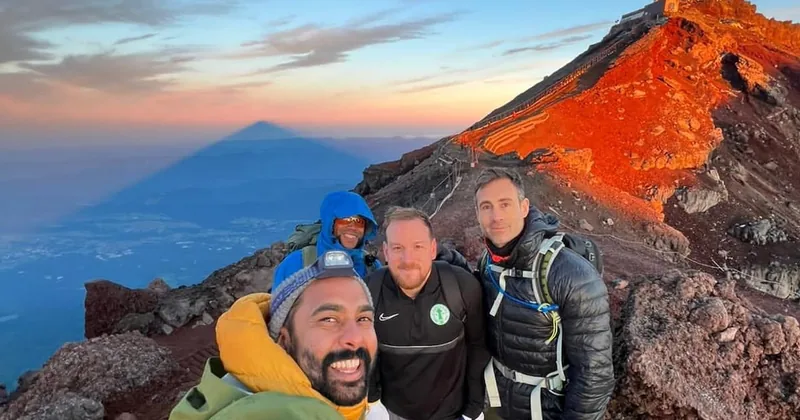
The sunrise climb goes up the Fujinomiya Trail with one guide for every six climbers, a look at the Hoei crater on the way up when the weather allows, and a hut night near the crater rim with dinner and breakfast. The summit is about 20 minutes away before dawn. Gear rental, registrations and climbing fees are handled. Rated 5.0 from 5 reviews; summer season only; full refund if you cancel up to 24 hours ahead.
Explore the 2-day sunrise climb from TokyoWhat is the Subashiri Trail like?
It starts lower, at 2,000 m, in a forest zone, and is noticeably quieter than Yoshida until the two trails merge at the 8th station. It is about 6.9 km and 6 hours 25 minutes up, and the descent includes a fast run down soft volcanic sand.
Subashiri is on the east side of the mountain, in Shizuoka. The first part climbs through trees, which gives shade and a gentler feel than the bare slopes elsewhere, and the huts are fewer but well spaced. Above the 8th station you share the path, and the huts, with the Yoshida crowds. In 2026 Subashiri opened on 1 July, earlier than its traditional date, at the same time as Yoshida.
The way down is the reason many people pick it: below the 7th station a long slope of loose sand lets you descend in big, sliding steps, much faster than on the way up. Gaiters keep the sand out of your boots, and a buff or mask helps on dusty, dry days. The 3-day guided hiking tour is based in Subashiri, with a lodge near the trailhead before the climb.
Three days and two nights from Subashiri: a lodge near the trailhead, a hut at the 8th station, the sunrise away from the summit crowds and a hot spring afterwards.
Check dates for the 3-day guided Fuji hikeIs the Gotemba Trail worth the extra hours?
Only if you are fit, experienced and want quiet. It starts at 1,440 m, climbs about 2,300 m over 10.5 km and takes about 8 hours 40 minutes up, with the fewest huts of any trail. The reward is space and a long sandy descent.
Gotemba is the least used of the four trails, on the south-east side in Shizuoka. The lower slopes are wide and open, and the huts are few and far apart, most of them higher up, so you need to carry more water and food than on other trails and plan your hut carefully. Fog on these broad slopes can make the path hard to follow, so stay on the marked route.
The descent is the longest sandy run on the mountain, a big, easy-angled slope of loose volcanic sand that takes you down fast. Some hikers climb another trail and descend partly on Gotemba for this reason, but only do that if you know how you will get back from the Gotemba 5th station.
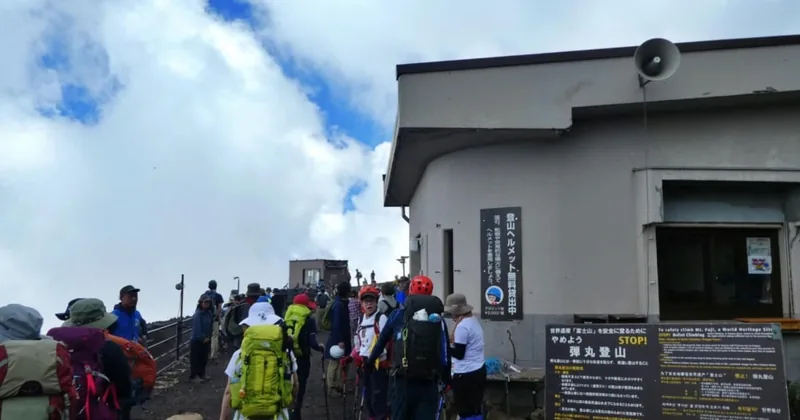
The guided summit climb lets you choose your route, including the quieter trails, with a private professional mountain guide. The climbing fee and your transport option are included, meeting at a Fujisan parking area or travelling from Tokyo by public transport with the guide. The hut night and meals are booked separately. Rated 5.0 from 2 reviews; summer season only; full refund if you cancel up to 24 hours ahead.
Explore the guided 2-day summit climbWhat is the crater walk (Ohachi-meguri) and where is Kengamine?
The crater walk is a loop around the rim of Fuji's summit crater, about 1 to 1.5 hours. Kengamine, at 3,776 m the highest point in Japan, is on the west side of the rim, so from some trails you walk part of the crater to reach it.
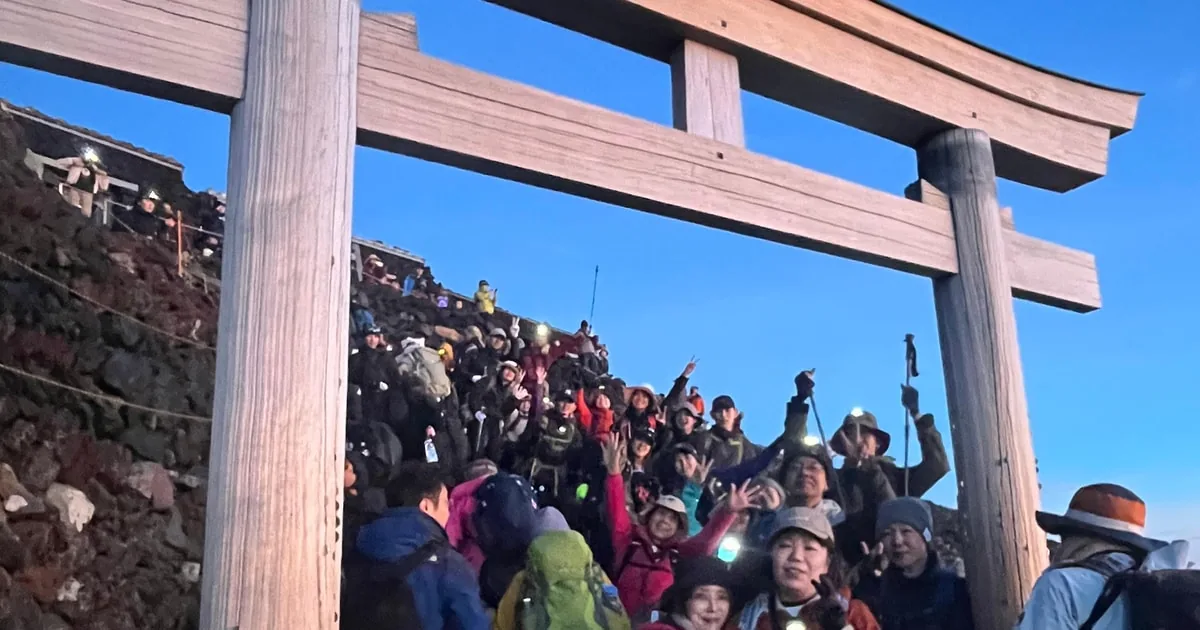
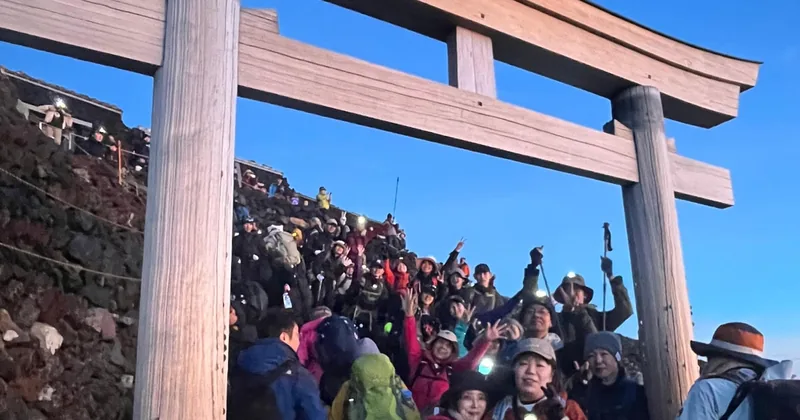
All four trails end on the crater rim, but not at the highest point. Fujinomiya and Gotemba arrive on the south-west side, close to Kengamine. Yoshida and Subashiri arrive together on the east side, where the torii gates and the summit huts stand, and from there you walk around the rim to Kengamine, or all the way round. The last climb to Kengamine is short but steep.
The crater walk is open only in the season (10 July to 10 September in 2026). It closes in strong wind, fog or snow, and the rim is exposed, cold and high, so go only in good weather and with warm layers. If you are tired or feel the altitude, the view from where you arrived is already worth it. How the summit morning fits into a two-day climb is in one day or overnight.
How do you get to each Fuji 5th station?
The Fuji Subaru Line 5th Station (Yoshida Trail) is the easiest to reach: direct highway buses run from Shinjuku, and local buses from Kawaguchiko Station. The three Shizuoka 5th stations are reached by seasonal buses and, outside the summer restrictions, by car.
- Yoshida: direct highway buses from Shinjuku run to the Fuji Subaru Line 5th Station; outside summer there are fewer, and some go via Kawaguchiko Station, so check the current timetable. From Kawaguchiko Station, the local bus takes about 50 minutes.
- Subashiri, Gotemba and Fujinomiya: in the climbing season, buses run to each 5th station from the nearest railway stations and towns on the Shizuoka side. Check the current season's routes before you plan.
- By car: in the season, private cars are restricted on the roads to the Yoshida, Fujinomiya and Subashiri 5th stations, so you park lower down and take a shuttle bus. Outside the season some of these roads close in winter.
- With a guide: guided climbs either meet you near the mountain or travel with you from Tokyo, which removes the transport puzzle.
Remember to plan your way back too: if you descend a different trail from the one you climbed, you arrive at a different 5th station. Where to stay and how to reach the Five Lakes area is on the planning section of the homepage.
Frequently asked questions
Can you go up one Fuji trail and down another?
Yes, as long as you know how you will get back from the other 5th station. Be careful at the 8th station on the Yoshida and Subashiri trails: the two share a path on the way up, but their descent paths split, and it is easy to end up at the wrong 5th station. Follow the signs for your own trail.
Which Fuji trail is the least crowded?
The Gotemba Trail, by a long way. Subashiri is quieter than Yoshida on its lower half, but it shares the upper section with Yoshida from the 8th station. Weekdays in July are generally quieter on every trail than the August holiday weeks.
Which Fuji trail has the most huts?
The Yoshida Trail, which is one reason officials recommend it for first-timers. Gotemba has the fewest, so plan your hut and carry more water there.
Are all four trails open in 2027?
The 2027 dates have not been announced yet. The usual pattern is early July to 10 September, and opening can be delayed by late snow. Check the official climbing site in spring.
Ready to book
Choose your hike
Check your date and the live price on GetYourGuide; the refund terms are shown on each option.
Guided 2-Day Summit Climb, Your Route
- A professional mountain guide, just for your group
- The Mount Fuji climbing fee
- Transport as in the option you choose
2-Day Sunrise Climb from Tokyo, Hut Stay
- Guided climb with one guide to six guests
- Hiking gear rental and a safety briefing
- Hut night near the top with dinner and breakfast
3-Day Guided Fuji Hike with Two Nights
A lodge night below, an 8th station hut, sunrise away from the summit crowds